
Getzinger PFAS
Using birds killed in building collisions to study forever chemicals in wild birds
PFAS, also known as "forever chemicals," are linked with health problems including cancers and conditions impacting the immune system, liver, and kidneys. To develop policies that protect human and ecological health, we need to learn more about how people and animals become exposed to the persistent chemicals. A new publication co-authored by a Loyola researcher describes a novel strategy for examining PFAS exposure in wild birds.
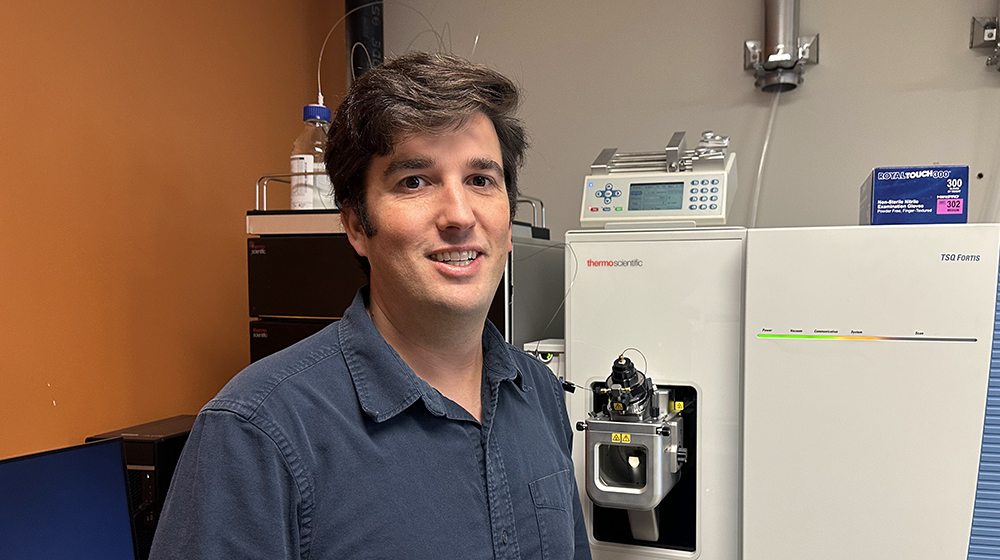
Gordon Getzinger, PhD, analyzed PFAS levels in birds killed in building collisions. The research advances efforts to understand PFAS exposure and develop strategies to protect people and wildlife.
Field studies have demonstrated that birds bioaccumulate PFAS through ecosystem exposures. However, conducting field studies to measure PFAS in wild birds is costly and labor-intensive, limiting research opportunities. School of Environmental Sustainability Assistant Professor Gordon Getzinger, PhD (BS' 10), and Ben Marks, PhD, of the Field Museum, published results of a study describing an alternative approach. They examined birds killed by building collisions during their migration through Chicago to learn about PFAS exposures in various species.
Members of the Chicago Bird Collision Monitors and Field Museum staff routinely collect collision fatality specimens to document the problem and develop strategies for reducing collisions. The diverse array of specimens collected opens opportunities to study PFAS exposures across many species and associate PFAS levels with their natural history, behavior, diet, geographic distribution, and habitat.
Getzinger and Marks studied concentrations of 40 PFAS of regulatory concern in the livers of 50 specimens from eight species of songbirds. The researchers found that PFAS levels varied according to the birds' feeding strategies and habitat utilization and were consistent with levels measured in wild populations previously. The work confirms that using collision fatalities could present opportunities for more detailed investigations of PFAS exposure and bioaccumulation in wild birds.
This novel study approach could accelerate research on PFAS exposure, contributing to a better understanding of how to protect people and wildlife from these long-lasting environmental contaminants.
The research results appeared in the journal Environmental Science & Technology Letters.
by Stephanie Folk
October 2025
Field studies have demonstrated that birds bioaccumulate PFAS through ecosystem exposures. However, conducting field studies to measure PFAS in wild birds is costly and labor-intensive, limiting research opportunities. School of Environmental Sustainability Assistant Professor Gordon Getzinger, PhD (BS' 10), and Ben Marks, PhD, of the Field Museum, published results of a study describing an alternative approach. They examined birds killed by building collisions during their migration through Chicago to learn about PFAS exposures in various species.
Members of the Chicago Bird Collision Monitors and Field Museum staff routinely collect collision fatality specimens to document the problem and develop strategies for reducing collisions. The diverse array of specimens collected opens opportunities to study PFAS exposures across many species and associate PFAS levels with their natural history, behavior, diet, geographic distribution, and habitat.
Getzinger and Marks studied concentrations of 40 PFAS of regulatory concern in the livers of 50 specimens from eight species of songbirds. The researchers found that PFAS levels varied according to the birds' feeding strategies and habitat utilization and were consistent with levels measured in wild populations previously. The work confirms that using collision fatalities could present opportunities for more detailed investigations of PFAS exposure and bioaccumulation in wild birds.
This novel study approach could accelerate research on PFAS exposure, contributing to a better understanding of how to protect people and wildlife from these long-lasting environmental contaminants.
The research results appeared in the journal Environmental Science & Technology Letters.
by Stephanie Folk
October 2025